
MSG in Thai Cooking: What It Is and Is It Bad for You?
Thai Ingredients
In Thai: pong churot (ผงชูรส)
MSG has spent fifty years taking the blame for other people’s hangovers. It’s a seasoning. Thai cooks use it the way the rest of us use salt, and the science has been on its side for decades.
- Tastes like
- Savoury, rounded, more-ish
- Find it
- Asian supermarkets, now big supermarkets too
- Swap
- Fish sauce, chicken powder or a little salt
What it is
Monosodium glutamate is the sodium salt of glutamic acid, one of the most common amino acids there is. Glutamate is the thing that makes parmesan, tomatoes, mushrooms, anchovies and fish sauce taste savoury. MSG is just that, pure, in a crystal.
A Japanese professor, Kikunae Ikeda, pulled glutamate out of a seaweed broth in 1908 and worked out it was the savoury taste in the soup. Commercial MSG went on sale the next year. Today it’s made by fermenting starch, sugar beet, sugar cane or molasses, much like vinegar or yoghurt.
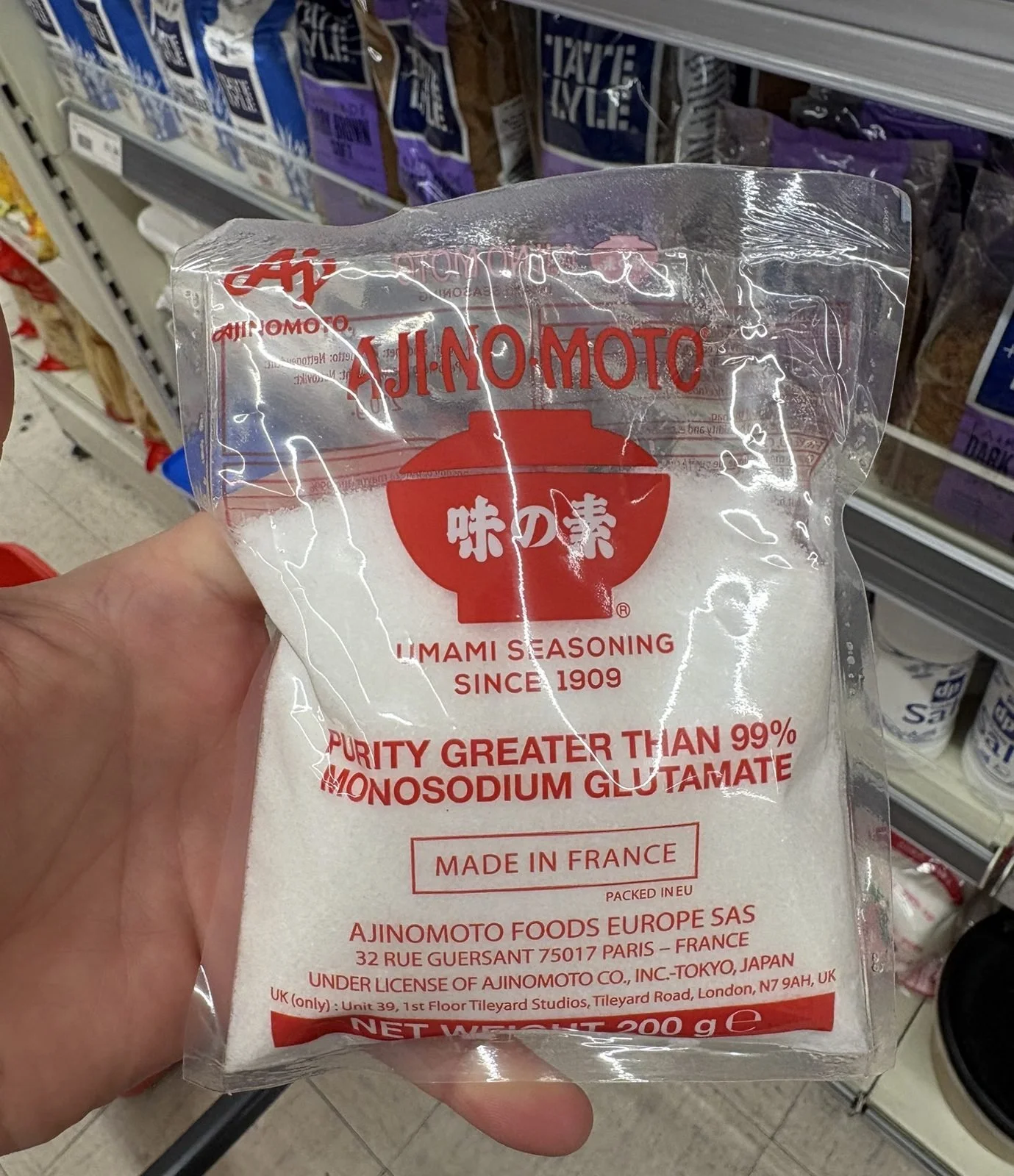
In Thai it’s pong churot, roughly flavour-lifting powder, and the white bag with the red bowl on it is in kitchens all over the country.
Is MSG bad for you?
No. The US Food and Drug Administration classes it as generally recognised as safe, and an independent scientific review it commissioned in the 1990s concluded the same. In studies where people who believe they react to MSG were given either MSG or a placebo, scientists couldn’t consistently trigger reactions.
The scare started with a single letter to a medical journal in 1968 and the phrase Chinese restaurant syndrome, and it stuck for reasons that had more to do with prejudice than science. Some people do report mild, short-lived symptoms after a lot of it, and the Mayo Clinic notes there’s no clear proof of a link. I’ve written the long version in is MSG bad for you?.
One more thing in its favour: MSG has about a third of the sodium of table salt, so swapping some salt for a pinch of MSG lowers the sodium in a dish.
How Thai cooks use it
A pinch, not a spoonful. In my recipes it’s always optional, and you need very little. It goes into stir-fries, noodle soups, broths, som tam and fried rice, usually alongside fish sauce rather than instead of it. It rounds out a dish and makes everything taste more of itself. Too much and food goes flat and cloying, with a dry mouth after.
Dissolve it in something wet, the sauce or the stock, rather than sprinkling it over at the end. And taste before adding more salt, because it changes how salty a dish seems.

MSG vs salt vs chicken powder vs fish sauce
| What it brings | Use it for | Watch out | |
|---|---|---|---|
| MSG | Savoury depth, no salty taste of its own | A pinch in stir-fries, soups, dressings | Too much tastes flat and cloying |
| Salt | Salty, sharpens flavour | Everything | Easy to overdo with fish sauce in the dish |
| Chicken powder | Salt, MSG and chicken flavour | Soups, fried rice, stir-fries | Not vegetarian, very salty |
| Fish sauce | Salt and natural glutamate, plus funk | The main seasoning in most Thai dishes | Not vegan. See fish sauce |
Where to buy it
Asian supermarkets sell it in bags, Ajinomoto being the best-known brand, and a lot of big supermarkets now stock it in the world food aisle, sometimes labelled umami seasoning.
Storing it
Keep it sealed and dry. It doesn’t go off in any meaningful way, so one bag lasts a home cook a very long time.
What to use instead
If you don’t want to use it, lean on ingredients full of natural glutamate: fish sauce, oyster sauce, soy sauce, dried shrimp, mushrooms. Pure MSG is vegan and gluten-free, made by fermentation and with no gluten in it at all. Chicken powder and some seasoning blends aren’t vegan, so read the label.
Quick answers
Is MSG bad for you?
No. The FDA classes MSG as generally recognised as safe, and controlled studies haven’t consistently linked it to symptoms. A few people report mild, short-lived reactions to large amounts.
What is MSG made from?
Today it’s made by fermenting starch, sugar beet, sugar cane or molasses, a process similar to making vinegar or yoghurt.
Is MSG gluten free?
Yes. Glutamate has nothing to do with gluten. Pure MSG contains no gluten.
Is MSG vegan?
Pure MSG is vegan. Chicken powder and some seasoning blends that contain it are not.
How much MSG should I use?
A pinch per dish. Dissolve it in the sauce or stock and taste before adding more salt.
Does MSG have less sodium than salt?
Yes. MSG has about a third of the sodium of table salt.
What can I use instead of MSG?
Fish sauce, oyster sauce, soy sauce, dried shrimp or mushrooms, which are all naturally rich in glutamate.
Further reading: the FDA’s questions and answers on MSG
More from the Thai larder
Every ingredient I cook with, explained: what it is, where to find it and what to use instead.
All Thai ingredients, A to ZGet my free Thai Pantry guideSubscribe and new recipes, articles and guides land in your inbox as soon as they go up, with my free Thai Pantry guide as a thank you.
Head chef & founder of Farang London restaurant. Cookbook author of ‘Cook Thai’ & ‘Thai in 7’. Chief curry paste basher and co-founder of Payst London.