
Glass Noodles: What They Are and How to Cook Them
Thai Ingredients
In Thai: woon sen (วุ้นเส้น)
In the packet they look like nothing: wiry, white and a bit sad. Ten minutes in warm water and they turn clear, slippery and bouncy, and they’ll soak up every drop of dressing you throw at them.
- Tastes like
- Almost nothing. It’s all texture
- Find it
- Asian supermarkets, as bean thread or vermicelli
- Swap
- Thin rice vermicelli
What they are
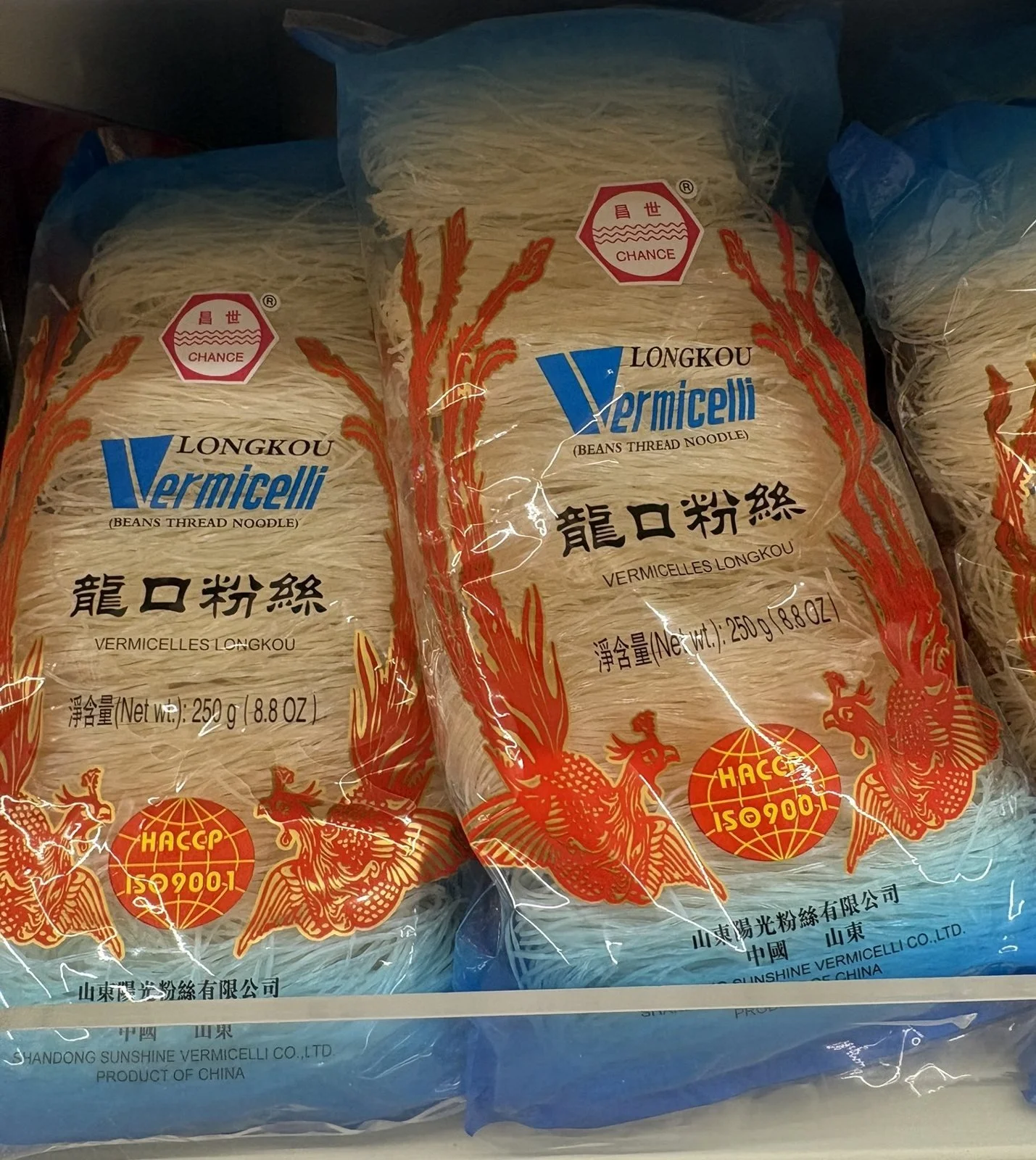
Thai glass noodles, woon sen, are thin noodles made from mung bean starch and water. They’re sold as glass noodles, bean thread, bean vermicelli, cellophane noodles or, like the bag in the photo, Longkou vermicelli, after the town in China famous for making them. Cooked, they go completely clear, which is where the name comes from.
They have barely any flavour of their own. That’s their strength. They take on whatever they’re cooked in or dressed with, and their chewy, springy bite is something rice noodles can’t do.
Glass noodles vs rice vermicelli vs Korean glass noodles
| Made from | Cooked | Texture | |
|---|---|---|---|
| Thai glass noodles (woon sen) | Mung bean starch | Clear | Slippery, springy, chewy |
| Rice vermicelli (sen mee) | Rice flour | White | Soft, breaks easily |
| Korean glass noodles (dangmyeon) | Sweet potato starch | Grey-clear, thicker | Very chewy, need longer cooking |
They all look alike in the bag, which is why people buy the wrong one. Read the ingredients: mung bean for woon sen. Korean glass noodles are a different noodle that needs different cooking. Rice noodles have their own page: Thai rice noodles.
How to cook them
Soak them in room-temperature or warm water for about 10 minutes, until they’re soft and bendy. Drain and give them a couple of snips with scissors, because a full-length nest of glass noodles is impossible to toss or eat. From there they need very little cooking: a minute in boiling water for a salad, or straight into the wok or the soup at the end.
Don’t overcook them. Left too long in boiling liquid they go gluey and clump together. And add them to soups at the last minute, as they keep drinking the broth as they sit.
What to make with them
Yum woon sen is the classic: a hot and sour glass noodle salad with prawns, minced pork, celery, onion and peanuts, in a lime, fish sauce and chilli dressing. My red nahm yum dressing does that job well. Pad woon sen is a homely stir-fry with egg, vegetables and whatever meat you’ve got, done in a hot wok. Goong ob woon sen is prawns baked in a clay pot on a bed of glass noodles that soak up all the juices. They go into clear soups, spring roll fillings and Thai suki too.
Where to buy them
Asian supermarkets, in bundles or bags. The best are made from 100% mung bean starch. Cheaper brands sometimes mix in pea or other starches, which changes the texture, so check the ingredients.
Storing them
Dry, they keep for a year or more in a sealed bag. Cooked, they’re best eaten straight away, as they stiffen in the fridge and keep soaking up liquid. Only soak what you need.
Diet and what to use instead
Pure mung bean glass noodles are gluten-free and vegan. They’re mostly carbohydrate with very little protein or fat. If you can’t find them, thin rice vermicelli is the closest swap, though it’s softer and won’t have the same bounce.
Quick answers
What are glass noodles made of?
Thai glass noodles are made from mung bean starch and water. Korean glass noodles are made from sweet potato starch.
Are glass noodles gluten free?
Pure mung bean glass noodles are gluten-free. Check the label, as some brands mix in other starches.
Are glass noodles the same as rice vermicelli?
No. Glass noodles are mung bean starch and go clear and springy. Rice vermicelli is rice flour, stays white and is softer.
How do you cook glass noodles?
Soak them in room-temperature or warm water for about 10 minutes, snip them shorter, then cook briefly in a salad, stir-fry or soup.
Why are my glass noodles gluey?
They’ve been overcooked. Soak them, then give them only a minute or so of cooking.
Are glass noodles healthy?
They’re low in fat and gluten-free, but mostly carbohydrate with little protein or fibre.
Can you use glass noodles in pad thai?
You can, but it won’t be pad thai. Pad thai is made with flat rice noodles.
Further reading: a classic yum woon sen
More from the Thai larder
Every ingredient I cook with, explained: what it is, where to find it and what to use instead.
All Thai ingredients, A to ZGet my free Thai Pantry guideSubscribe and new recipes, articles and guides land in your inbox as soon as they go up, with my free Thai Pantry guide as a thank you.
Head chef & founder of Farang London restaurant. Cookbook author of ‘Cook Thai’ & ‘Thai in 7’. Chief curry paste basher and co-founder of Payst London.