How Southeast Asian Food Conquered Britain - And Why It's Only Getting Started
I remember the first time I put a jungle curry on the menu at Farang. A few customers looked at it like I'd made a mistake. Too spicy, too unfamiliar, too far from the green curry and spring rolls they'd come expecting. Now those same customers come in and ask for more chilli with it.
That shift - that quiet, decade-long education of the British palate - is one of the most interesting things that has happened to food in this country in my lifetime. And I say that as someone who was lucky enough to be involved in it from very near the beginning.
It Started With a Man Named David Thompson
If you want to understand how Southeast Asian food arrived properly in the UK, you have to start with an Australian chef who ended up in Bangkok by accident.
David Thompson fell in love with Thailand on a holiday in the mid-1980s. On an early trip to Bangkok, he apprenticed himself to an elderly cook named Khun Sombat, who had learned her craft in the royal palace. Thompson went on to document traditional recipes and techniques being passed down through generations - food that was at serious risk of being lost entirely - and in 2001 he brought it to London.
Nahm opened at The Halkin Hotel in London in 2001 and became the first Thai restaurant ever to receive a Michelin star. For the industry, it was a statement. Thai food wasn't just takeaway. It wasn't just something sweet and affordable to mop up a Friday night. In the right hands, it was as complex, disciplined and extraordinary as anything coming out of France or Japan.
Thompson is known in the industry as the godfather of Thai food in the UK. What he did at Nahm wasn't just cook well - he changed what people thought was possible. And the ripple from that moment is still being felt today in restaurants all over the country.
What London Looked Like Then
I came to Thai food through a chef called Jane Alty at the Begging Bowl in Peckham. Jane had trained under David Thompson and was cooking some of the best Thai food in London. At that point, you could count the number of proper Thai restaurants in the city on one hand.
The rest of the landscape was different. Pad thai, green curry, spring rolls - that was Thai food for most people. Chain restaurants bringing in curry paste, cooking to a low spice threshold, serving sweet westernised versions of classics that bore only a passing resemblance to what the food actually was. It wasn't bad, exactly. It just wasn't the real thing.
Working at the Begging Bowl is where I met Andy Oliver, another Thompson graduate, who went on to open Som Saa in Spitalfields and later Kolae in Borough with chef Mark Dobby - also a Nahm alumnus. From the Begging Bowl, Andy introduced me to Ben Chapman and Brian Hanon, who were opening a new Thai barbecue concept in Soho: the Smoking Goat. They asked me to head chef it, and I said yes.
Smoking Goat opened in Soho in 2014 - one of the first of what some called "nu-Thai" - a movement that disavowed sweet, westernised creations and instead drew direct inspiration from Thompson and the food cultures he'd brought to people's attention. It felt, at the time, like the start of something. Looking back, it clearly was.
The Moment I Knew Something Had Changed
It wasn't a review or a reservation list that told me the tide was turning. It was ingredients.
When I first started cooking Thai food seriously in London, finding the right ingredients was a genuine problem. Makrut lime leaves. Green papaya. Thai basil. Fresh galangal. These weren't things you could just pick up easily - you had to know where to go, travel for them, build relationships with specialist suppliers.
Now you can find makrut lime leaves in a Sainsbury's. That is not a small thing. That's a mainstream British supermarket betting that enough of its customers know what those leaves are and want to cook with them at home. The supply chain follows the demand. And the demand has genuinely changed.
Farang and the Building That Started It All
My stepdad had built something of an institution in the old San Daniele building in Highbury. The Arsenal team used to come in after games.
When he retired, he introduced me to the landlord. I took it on as a pop-up, more to test the water than anything else. I had no money and no real plan. I didn't know what to expect.
We got busy pretty quickly. Fay Maschler, Giles Coren and Grace Dent all came in early and gave us the kind of reviews that give a young restaurant real momentum. I'd be lying if I said that wasn't luck as much as anything else. But the food had to hold up once they got there, and it did.
Farang has now been going for nearly a decade. And in that time the world around it has changed completely.
AngloThai and the Proof That This Is Now Serious
If you want a single moment that confirms Thai food in the UK has genuinely arrived, look at what happened to John Chantarasak in late 2024.
John is the kind of chef whose story you couldn't make up. Born in Liverpool to a Thai father and British mother, raised in the Wye Valley in Wales, he went on to train at Le Cordon Bleu in Bangkok before working under David Thompson - the same lineage that runs through much of what happened to Thai food in London over the last decade. He spent years running AngloThai as a series of pop-ups and residencies across London. Then, two weeks before Christmas 2022, a landlord pulled the plug on his first permanent site in Fitzrovia. As he told Forbes: "That was the most demoralising feeling Des and I have had."
He kept going. AngloThai finally opened permanently in Marylebone in November 2024, run by John and his wife Desiree - Thai cooking filtered through the finest seasonal British ingredients, Cornish monkfish, Crown Prince pumpkin, Hebridean hogget. Three months later, it had a Michelin star. The UK's only Michelin-starred Thai restaurant. Nearly a decade after starting those pop-ups, the wait was worth it.
What struck me almost as much as the achievement itself was what John said about the restaurants that came before him. Speaking to SL Man, he was clear about the lineage: "Smoking Goat and The Begging Bowl ignited the next stage in Thai restaurants - such as Singburi, Kiln and Farang, which all put their modern Thai ethos into the food they cook. Now with the likes of Plaza Khao Gaeng and Speedboat Bar opening, the Thai food scene is getting better and better."
I'll take that. From someone who just won the only Michelin star in Thai cooking in this country, that means something.
What the Wider Scene Looks Like Now
The Week has described the Thai street food coming out of Som Saa, Smoking Goat, Kiln and Farang as "among the most innovative and impressive served anywhere outside Thailand itself" - remarkable, it noted, given that the head chefs are all British.
Singburi, which moved from a beloved spot in Leytonstone to Shoreditch, is cooking live-fire Thai with a counter you can sit at and watch every dish come together. Speedboat Bar has brought the energy of a Bangkok canteen to Chinatown and Notting Hill. Plaza Khao Gaeng - Luke Farrell's project - is doing things with regional Thai cooking that would impress anyone who's spent time eating in the south of Thailand.
And it isn't just Thai food making its mark. Vietnamese, Malaysian, Filipino, Indonesian - the breadth of Southeast Asian cooking available in the UK right now is extraordinary compared to even ten years ago. Thai, Filipino and Vietnamese cuisines now represent the fastest-growing segment of Asian food trends globally, moving from niche to mainstream at a rate that would have seemed unthinkable a decade ago.
Why the Palate Shift Matters
The jungle curry moment I mentioned at the start - customers telling me nobody could eat that spicy, then years later asking for more chilli - that's not just an anecdote. It's a map of how a country's relationship with food actually changes.
It doesn't happen through marketing. It happens through experience. Through people travelling to Thailand and Vietnam and Malaysia and coming home wanting to recreate something they ate at a street stall at midnight. Through second and third generation British-Asian families cooking food at home that then finds its way into the national conversation. Through chefs taking risks on menus and trusting that customers will come with them.
A decade ago the order was almost always pad thai, green curry, spring rolls. Now people are coming in asking for nahm prik ong, gaeng som, som tam, pad kee mao. Dishes with depth, with regional identity, with a flavour profile that takes a bit of knowledge to appreciate. That's not nothing. That's a decade of travel, of eating, of curiosity - and it shows up on the reservation notes and at the table every single service.
The spice conversation has shifted too, and in a way I find genuinely encouraging. Ten years ago, a table sending back a dish because it was too hot would often frame it as the dish being wrong - too spicy, as if the chilli content was a mistake that needed correcting. Now the same conversation sounds completely different. People will say "that's too spicy for me" - which is an entirely different thing. It's an understanding that the heat isn't an error. That the chilli has a purpose, a place, a reason rooted in where the dish comes from. The dish is right. It's just more than they can handle today. That shift in framing might sound small but it represents a much deeper food literacy than this country had even five years ago.
More bespoke, more regional, more rare. That's the direction of travel and it shows no sign of slowing.
What Comes Next
The chefs coming through now have grown up eating this food. They've travelled. They've eaten in the markets and the roadside restaurants and the family kitchens of Southeast Asia. They understand it differently to how I understood it when I first walked into the Begging Bowl. And they're going to do things with it that I haven't thought of yet.
Time Out's 2026 roundup of London's best Thai restaurants covers AngloThai for Michelin-star cuisine, Kiln for fiery flavour, Speedboat Bar for a boozy dinner, Kolae for southern Thai - a level of nuance and regional specificity in a mainstream food guide that simply didn't exist five years ago.
That's the measure of how far we've come. Not a trend. Not a moment. A permanent, irreversible shift in what British food culture looks like.
I was lucky enough to be around at the start of it. And I'm still here, still cooking, still learning. Farang is a product of this story - and I hope it's still part of the next chapter of it too.
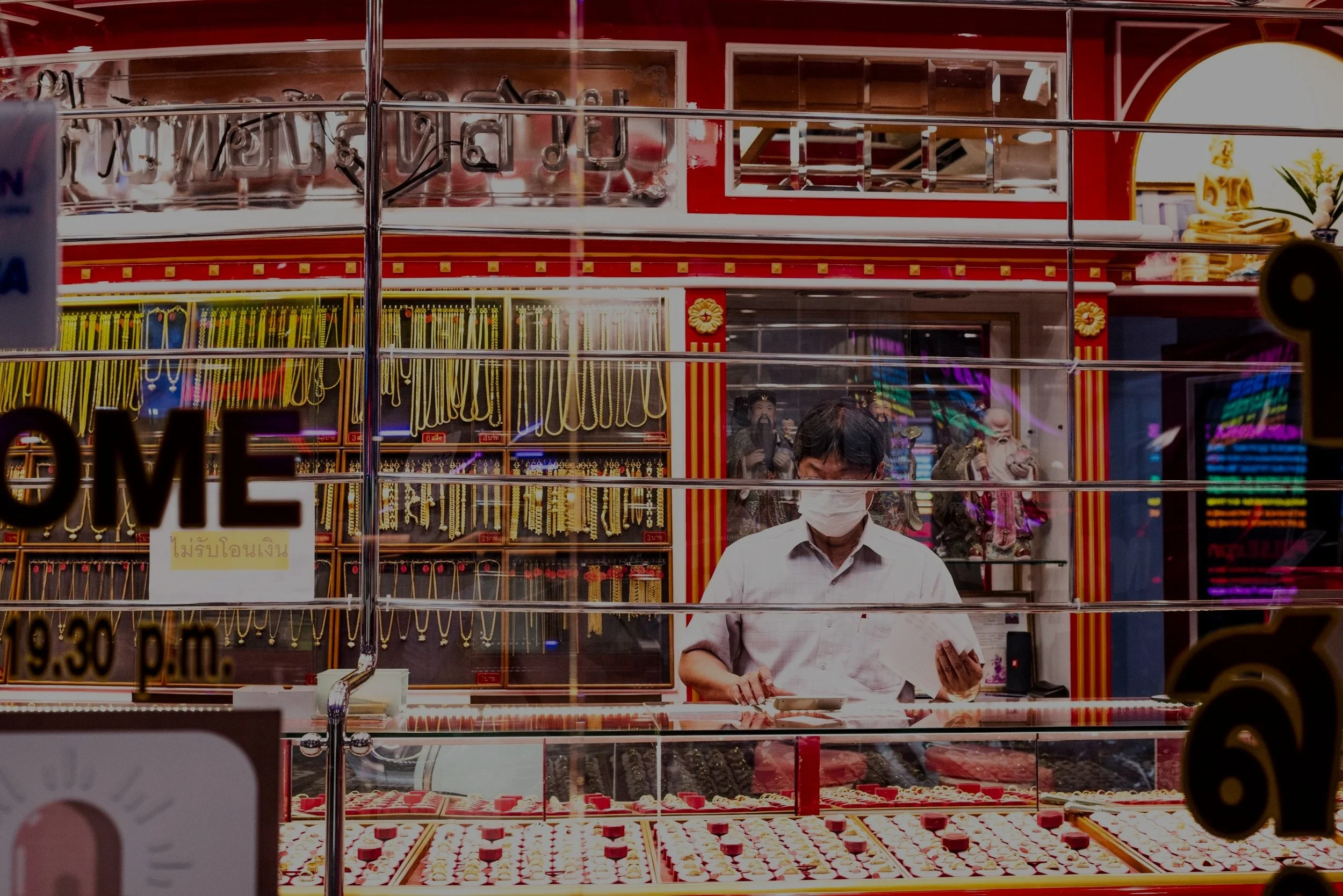
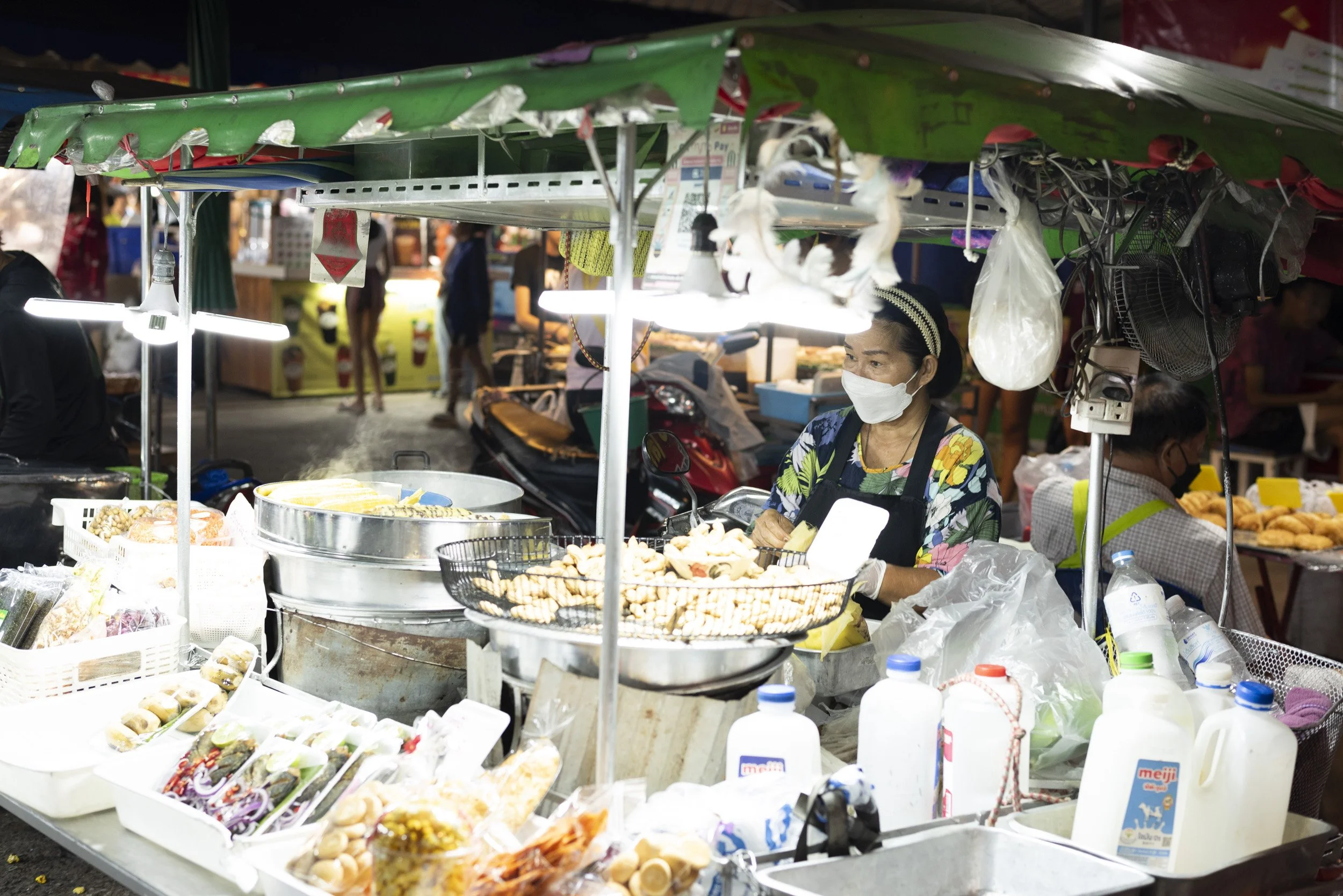
Seb Holmes is a chef and the owner of Farang London, a Thai restaurant at 72 Highbury Park, London N5. He also runs Payst, a Thai paste and ingredient brand. Photos Taken by Chef Charles Whatley during a Farang trip to Bangkok.
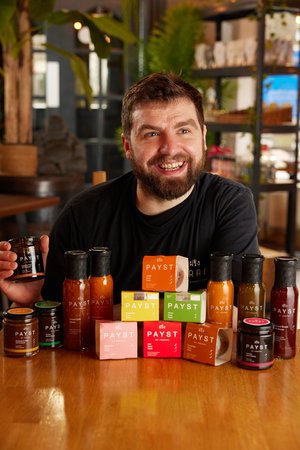
Head chef & founder of Farang London restaurant. Cookbook author of ‘Cook Thai’ & ‘Thai in 7’. Chief curry paste basher and co-founder of Payst London.