
A Jar of Hung Lay and a Golden Fork
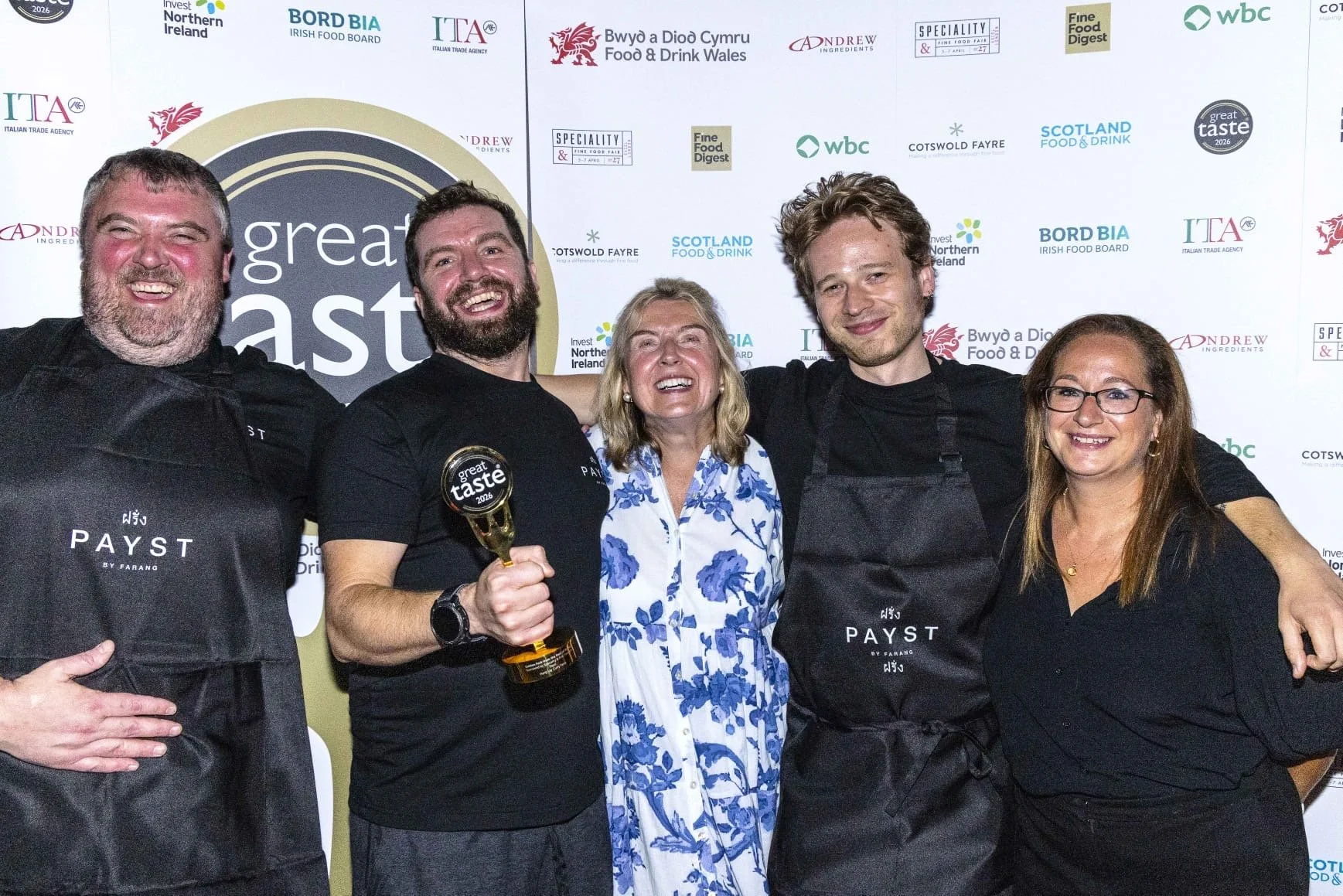
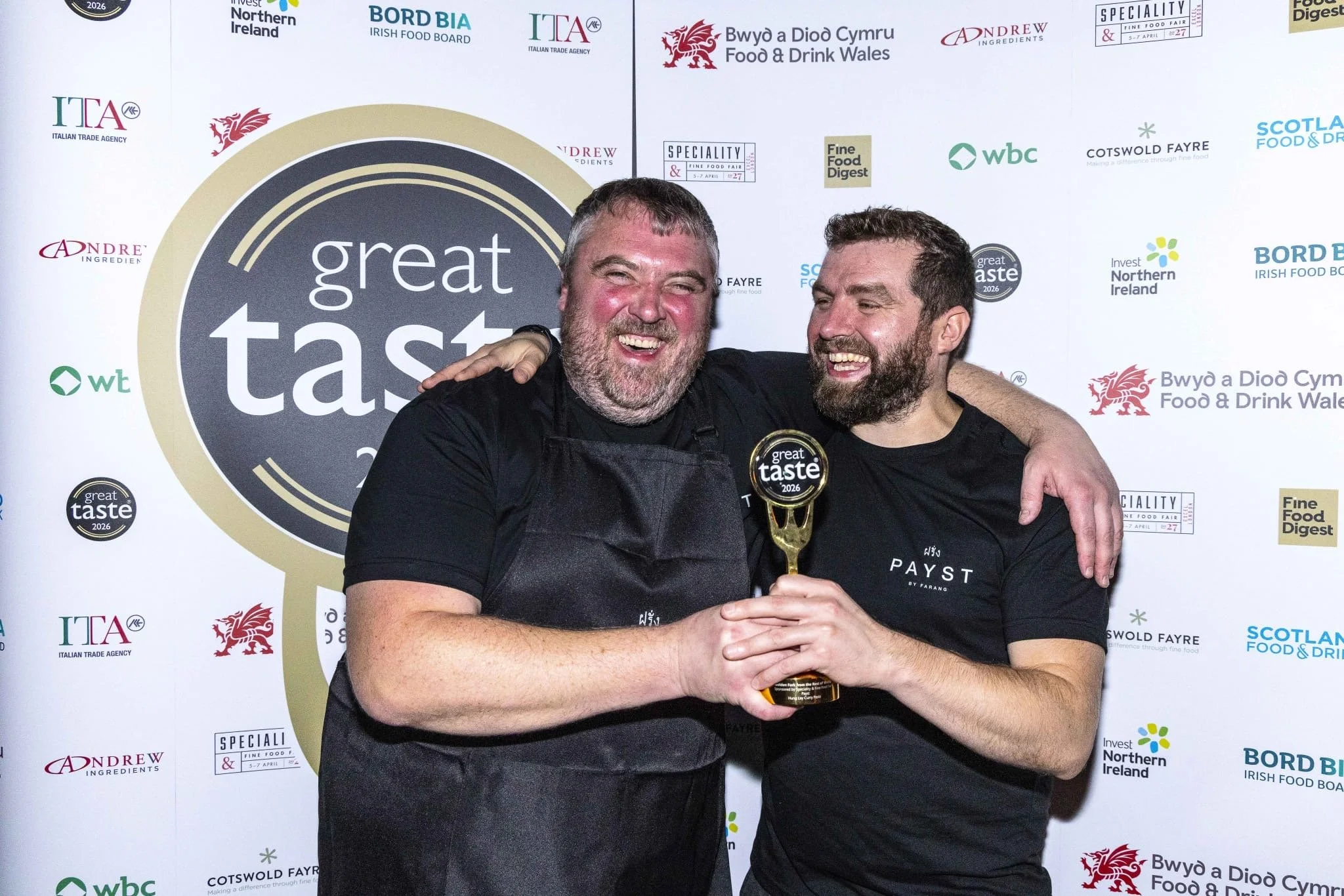
Last Tuesday I spent the Great Taste Golden Fork ceremony standing behind a table at Battersea Arts Centre, spooning little pots of hung lay into the hands of anybody who came past. That was the job as far as I was concerned. Feed people, talk about the curry, answer the same three questions forty times, get the train home. Then they read our name out. Hung Lay. Payst. Golden Fork from the Rest of the World. There was no long walk up to a stage, because Nigel Barden came down through the room to us with the microphone and presented it where we were standing, with a serving spoon still in my hand and a queue of people in front of me waiting for a taste.
I want to be clear about this bit, because it matters more than the trophy does. We were not expecting it. Not in a modest, everyone-says-that way. I had decided on the way in that the nomination was the win and the evening was a job, and I meant it, and I have rarely been so happily wrong about anything in my life.
If you don't work in this industry you have probably never heard of the Golden Forks, so let me explain why I have been useless all week. They are the top end of Great Taste, run by the Guild of Fine Food, and the trade calls them the Oscars of food and drink, which sounds like the sort of thing a press release says until you are in the room and understand it is about right. More than fifteen thousand products went in this year, from all over the world. Around eight hundred judges, chefs and buyers and writers and producers and retailers, tasted their way through them over a hundred and five days across London, Dorset, northern Italy and Ireland. Every single one blind. No label, no logo, no clever jar, no story about a grandmother in Chiang Mai and a mortar she has had since 1962. Just the thing itself in a pot, in front of people who taste for a living and have long since stopped being charmed by anything other than flavour.
Most things that go in come back with nothing. Six out of ten products do not get a single star. Three stars went to 306 products this year, about two in every hundred, and that is only where it starts, because the Golden Forks are then pulled out of that small pile over three more rounds of judging. In our category we were up against a honey and a naturally brewed soy sauce, both made by people who have given years of their lives to getting one thing right, and I have tasted enough proper produce to know that on a different night, with a different set of palates, that envelope goes somewhere else entirely. That is not me being modest. That is what it means to be in a category with things that good.
Hung lay is a northern Thai curry with Burmese blood in it. Pork belly cooked low and slow until the fat has given up and gone glossy, the sauce turned sticky and sour and sweet all at once, ginger and tamarind and pickled garlic and warm dried spice doing the work underneath. It is not what most people in this country picture when they hear the word Thai, which is a large part of why I love it, and it is why we were stood there with a pan of it rather than a leaflet. You eat it once and you want to know where it came from.
The paste is where the dish lives or dies. Shallots, garlic, lemongrass, galangal, dried chillies, broken down until there is nothing left in there to fight you, and then cooked out properly, slowly, until the raw edge has gone and the whole kitchen smells like something you would follow down a street. Most jars on a supermarket shelf skip that last part because time costs money and nobody can see it in the jar. We don't skip it. The judges picked up on exactly that, on the balance between sweet and savoury and fruit and aromatics, and they said it tasted genuinely homemade, which made me laugh, because it is. There are several sets of sore wrists at Farang that will confirm it.
Payst started with nothing. No investor, no factory, no plan beyond a restaurant kitchen, my brother Tony, and a stubborn belief that somebody cooking at home on a Tuesday night deserved the same paste we put on the line on a Saturday. For as long as I have been cooking, Thai food at home in Britain has meant a jar of something green that tastes mostly of sugar and citric acid, and people have quite reasonably concluded that this is what Thai food tastes like. It does not. It never has. That gap between what the food actually is and what this country has been sold is the thing that gets me out of bed, and it is what the whole brand was built to close. We wanted someone to open a pot in their own kitchen and get hit by the same smell that hits me when the first batch goes in the wok before service, without needing a pestle, a Thai supermarket and three hours they do not have.
Nobody warns you how hard that is. Running a restaurant is already a slow and inventive way to lose your mind. Running a food brand out of the same building means making paste in the morning before a full service, then sitting with labels and couriers and spreadsheets at an hour when sensible people are asleep, all of it underneath a constant low hum of wondering whether anybody outside your own four walls actually cares. Every small producer in that room last week knows that hum. You could see it on the faces of the ones who got called up and you could see it just as clearly on the faces of the ones who didn't, because the difference between those two groups is nothing like as large as the night makes it look.
So being handed that award across a table of half-eaten samples felt less like arriving anywhere and more like being told, by people with no reason on earth to be kind about it, that the thing we have been quietly obsessing over in a hot kitchen for years is worth the bother. I have been in kitchens since I was a teenager and I have had very few moments that landed like that one. I do not intend to get casual about it.
We are only getting started. There are more pastes to make, more kitchens to get them into, and a lot more people to convince that Thai cooking at home can taste the way it is supposed to. We got a taste of success at the Golden Forks this year and it was every bit as good as I had hoped it would be. Then Wednesday came, and there were shallots to peel and galangal to smash, because the next pot has to be as good as the one that won.
If you want more of this, subscribe. New recipes and articles straight to your inbox, and my free Thai Pantry guide to get you started. Sign up here.
Visit us at faranglondon.co.uk. Sauces and pastes for cooking Thai at home at payst.co.uk.
For more recipes, signed copies of my cookbooks are available at Payst: Cook Thai and Thai in 7.
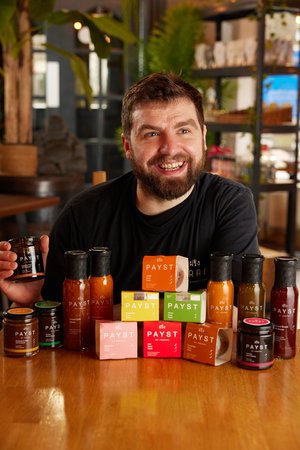
Head chef & founder of Farang London restaurant. Cookbook author of ‘Cook Thai’ & ‘Thai in 7’. Chief curry paste basher and co-founder of Payst London.