
You Never Stop Learning. That's the Whole Point.
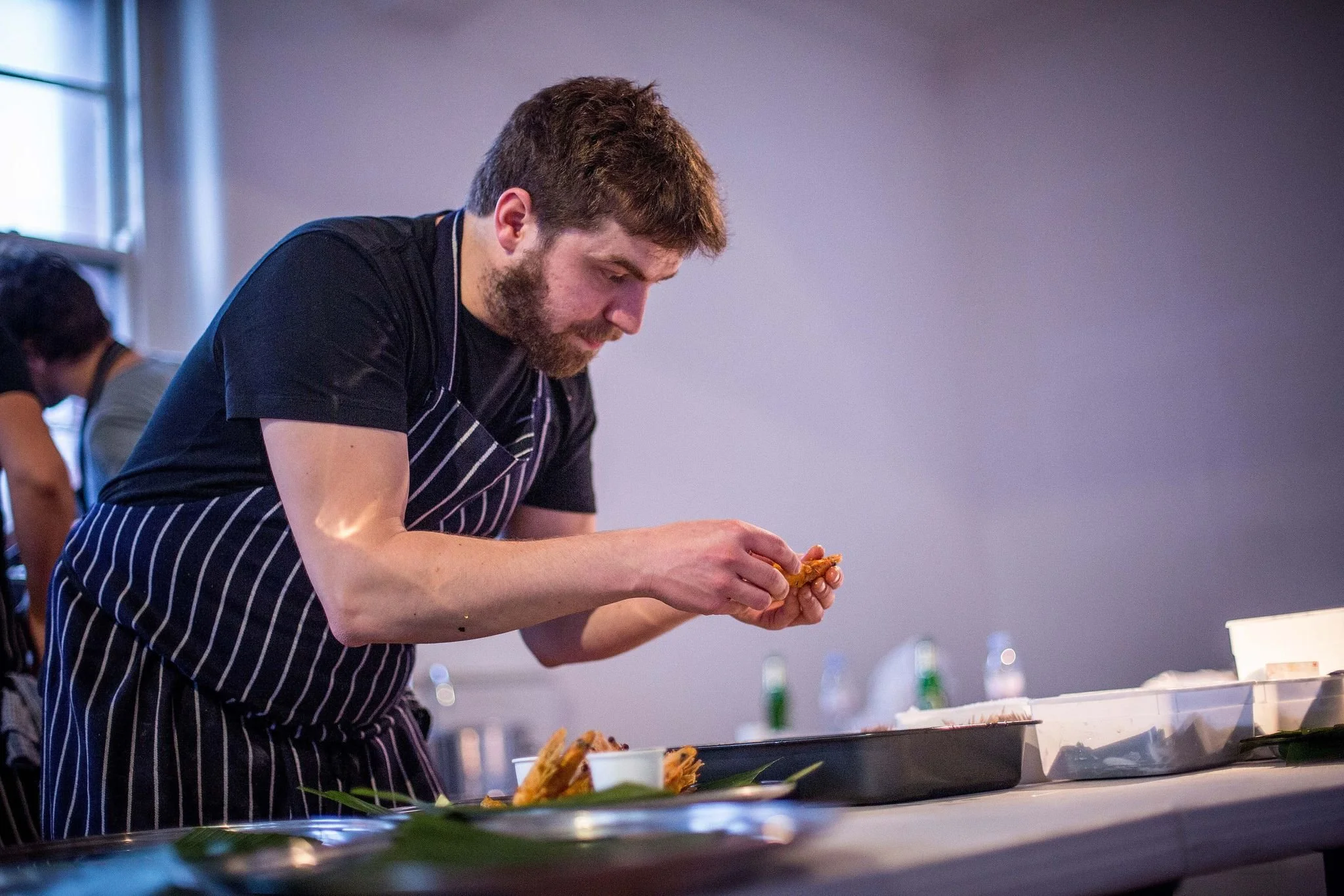
I came to Thai food the wrong way. No family connection, no childhood memory of a grandmother's kitchen smelling of galangal and dried shrimp paste. I came from pubs in the Cotswolds, from British and European cooking, from a world where the most exotic thing on the menu was probably a French onion soup. Then I walked into a Thai kitchen in Peckham and something happened that I still find difficult to explain properly, even now.
I'd always cooked. Since school, since a work experience placement at a pub in Deddington in Oxfordshire where my brother's mate was head chef and took me on and showed me what a kitchen actually was. I loved it immediately, the same way I loved writing, and for years I carried both things around convinced I'd find a way to make them fit together. I got a journalism degree at Kingston University, spent the holidays cooking in Woodstock, and when I graduated I headed into London with a backpack full of CVs and a loose plan.
My stepfather arranged an interview at Bar Italia in Soho. Tony offered me the job on the condition I learned Italian. The next day, with no particular ambition beyond covering the rent on a flat in East Dulwich, I did a trial at the Begging Bowl. Jane saw something in me, though whether it was potential or just the novelty of a kid from the Cotswolds with everything still to learn, I couldn't tell you. Probably both. She took me on anyway. By the time my graduation ceremony came around I was due in for a shift and I went to work instead. I never collected my certificate. It might still be there.
That was the beginning, though I didn't know it was a beginning at the time. It felt like a job.
The kitchen was busy and I was young and had no idea what I was doing with about a third of the ingredients in front of me. Every new job is hard in hospitality, doubly so as a chef, but this wasn't just a new job. It was a new language and I'd shown up without a dictionary. The flavour logic was different, the culture behind the food was different, the pace was relentless. You sink or you swim. I swam, as hard as I could, and I'm still swimming now fifteen years later and the water keeps getting deeper, and that is precisely why I haven't stopped.
Thai food does that to you if you let it. There is more in this cuisine than any one person could learn in a lifetime, and I don't mean that as a poetic flourish, I mean it as a practical fact. Take gaeng som. A southern Thai sour orange curry, thin as water, built on dried shrimp and wild turmeric and a paste of gapi so pungent it stops you in your tracks. When I first made it, it took me a while to understand it. The way such a thin liquid can carry that kind of face-twisting complexity. The power of the gapi paste. The intensity of the tamarind pulling everything into a sourness that goes right to the edge of what your palate thinks is acceptable, that earthiness that is almost too much, right at the limit of fishiness and saltiness, and then you eat it with rice and it clicks and it's perfect and you wonder how you ever doubted it. That journey from confusion to understanding is one I've made with this food over and over again, and I expect to keep making it.
Compare that to a northern khao soi, fatty and coconut-rich and almost medieval in its depth, and you start to understand that Thai food isn't a cuisine so much as a collection of entirely different philosophies about what food is supposed to do to you. Most people in Britain haven't encountered half of it. That's been slowly changing, and the change is real and visible and worth talking about.
When I started cooking Thai food in London, the gravitational pull of the green curry was strong and largely inescapable. There were always people who knew, who'd travelled, who came in asking for things not on the menu, and I loved them for it. But they were the exception. That's changed. Not completely, not everywhere, but the shift is real. Dishes I'd have called genuinely obscure five years ago, jungle curries, laap, tom kha, have crossed over. The people coming through the door now arrive with more curiosity than I could have expected a decade ago. Thai ingredients that I used to hunt down through specialist suppliers sit on shelves in major supermarkets. New Thai restaurants are opening constantly, and a good number of them are cooking regional food with real intention. Something has moved.
I want to be clear about something though, because I think it matters. None of this makes the green curry wrong.
Food is for everyone. People like what they like and I will argue that case against anyone who wants to sneer at a diner for ordering the thing they enjoy. The green curry on our menu at Farang is made with free range chicken, a paste we pound by hand from scratch, the chicken cooked sous vide in the curry so the seasoning goes all the way through, finished with fresh Thai basil grown locally here in London, fried salted curry leaves, crispy shallots, lightly pickled cucumber to cut through the heat. It is a version of that dish that could only have come from fifteen years of loving it and cooking it in this city, for these people. I'm proud of it.
What I have less patience for is the person who has spent their life eating green curry made with a shop-bought paste and ten litres of coconut milk, then encounters something actually balanced, something with real heat and the kind of sourness and bitterness that Thai food is supposed to carry, and declares it wrong. Not wrong for them. Wrong, full stop. Typed on a phone, posted publicly, permanent. No curiosity, no understanding, just the confidence of someone who has confused familiarity with expertise. Every industry has its version of this. Hospitality wears it worst.
But I don't want to end there because the bigger story is better than that.
I never abandoned journalism. It was always the plan. I just had to wait until I had something real to say, until the words came from a place of having actually lived it, day in day out, face to face with it. You cannot write with authority about something you have only observed. I know what I know because I've cooked it, fought with it, got it wrong, got it right, and kept going.
Here is the thing nobody tells you at the start, and that you can only really understand once you're deep enough in. The more you learn, the larger your ignorance becomes. Every door you open reveals three more you hadn't seen before. There are billions of lifetimes of culinary knowledge inside Thai cooking alone, and not one person walking the earth holds more than a fraction of it. The chefs who understand that are the ones worth eating from. The ones who think they've arrived stopped growing the day they decided they had.
Fifteen years in, I still learn something about this food every week. I intend to keep it that way until I can't cook any more.
That's not a complaint. That's the whole point.
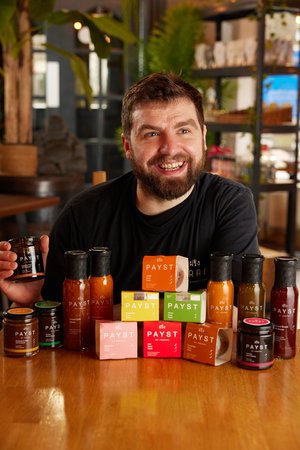
Head chef & founder of Farang London restaurant. Cookbook author of ‘Cook Thai’ & ‘Thai in 7’. Chief curry paste basher and co-founder of Payst London.